How to Cook Salmon Without the Fishy Smell 5 Odor-Proof Methods
Salmon is celebrated globally for its high concentration of omega-3 fatty acids, vibrant color, and rich, buttery texture. However, for many home cooks, the primary barrier to preparing this nutritional powerhouse is the lingering “fishy” aroma that can permeate a home long after the meal has concluded. This characteristic scent is often the result of trimethylamine (TMA), a compound that forms as fish proteins break down. Fortunately, by applying specific culinary techniques and chemical principles, it is possible to enjoy perfectly cooked salmon while maintaining a neutral and fresh kitchen environment.
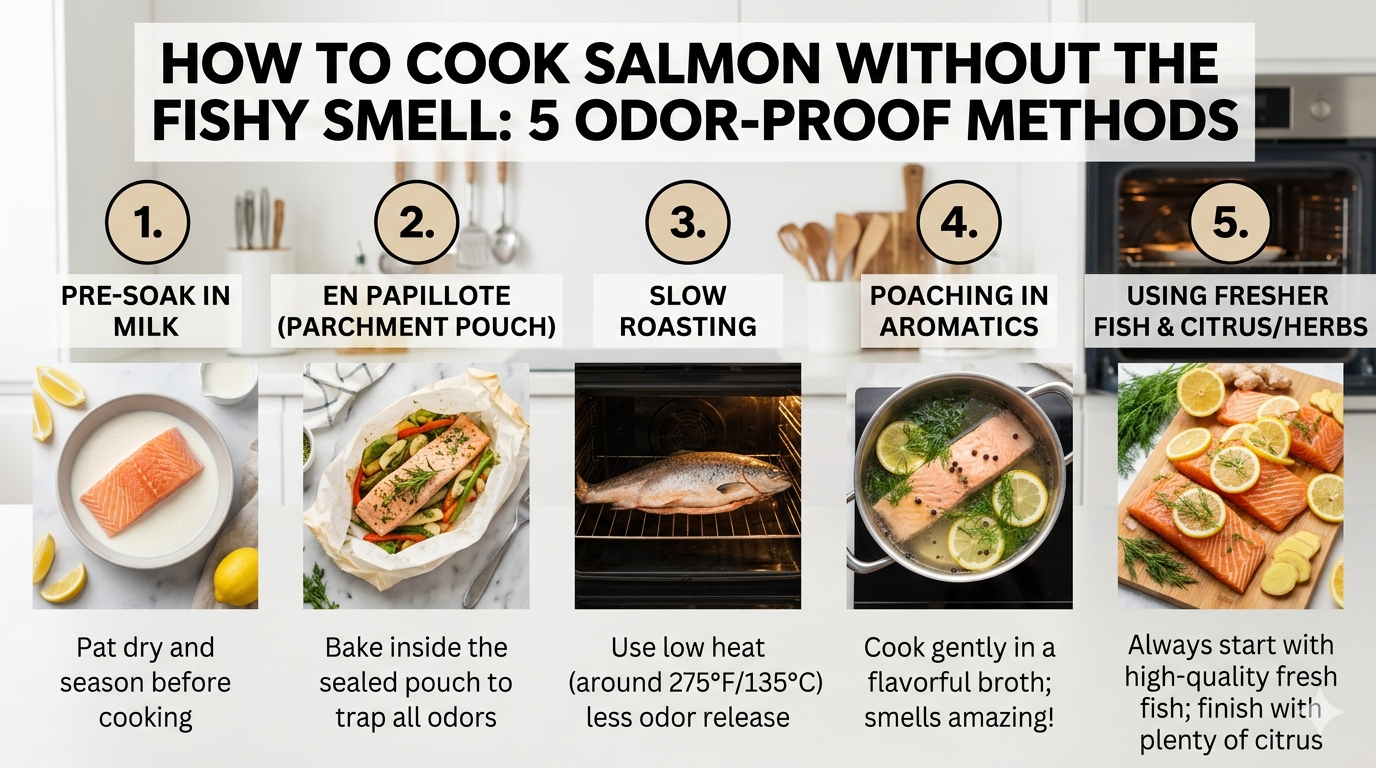
The following methods, as illustrated in image_1a6829.jpg, provide a comprehensive toolkit for odor-proof seafood preparation.
1. The Dairy Shield: Pre-Soaking in Milk
One of the most effective ways to neutralize the compounds responsible for fish odors is a simple pre-soak in milk. This technique is rooted in chemistry rather than just masking the scent.
- How it Works: Milk contains a protein called casein. Casein has a high affinity for trimethylamine (TMA). When salmon is submerged in milk, the casein binds to the TMA molecules on the surface of the fish.
- The Process: Place your salmon fillet in a shallow bowl and cover it completely with milk. Allow it to sit for approximately 20 minutes.
- Final Preparation: After the soaking period, it is essential to pat the fish completely dry and season it immediately before cooking. Drying the surface is critical to achieving a proper sear or roast, as excess moisture will cause the fish to steam rather than brown.
2. The Protective Barrier: En Papillote (Parchment Pouch)
“En Papillote” is a classic French technique that translates to “in paper.” By sealing the salmon inside a parchment pouch, you physically contain the aromatic vapors that would otherwise escape into your kitchen.
- The Method: Place the salmon fillet on a sheet of parchment paper, often layered with aromatic vegetables like bell peppers, zucchini, or onions.
- Sealing the Aroma: Fold and crimp the edges of the paper tightly to create an airtight seal.
- The Result: As the salmon bakes inside the sealed pouch, it steams in its own juices and the moisture from the vegetables. This traps all odors within the paper until the moment the pouch is opened, typically at the dining table. This method also ensures the fish remains incredibly moist, as no moisture can escape the parchment barrier.
3. The Gentle Heat Strategy: Slow Roasting
The intensity of the cooking temperature directly correlates to the amount of odor released into the air. High heat causes fish oils to splatter and oxidize rapidly, which aerosolizes the fishy scent.
- Temperature Control: Slow roasting involves using a much lower oven temperature, typically around 275°F (135°C).
- Benefits of Low Heat: At this reduced temperature, the structural proteins in the salmon break down more slowly and gently. This results in significantly less odor release during the cooking process.
- Texture and Flavor: Beyond odor control, slow roasting produces a superior texture. The fish cooks evenly from edge to center, avoiding the common pitfall of dry, overcooked outer layers while the middle remains raw.
4. Submerged Aromatics: Poaching in Flavorful Broth
Poaching is a wet-heat cooking method that keeps the salmon entirely submerged in a liquid base, preventing odor-carrying molecules from becoming airborne.
- The Liquid Base: Instead of plain water, use a flavorful broth or “court bouillon” infused with aromatics.
- Aromatic Infusions: Common additions include lemon slices, fresh dill, peppercorns, and ginger.
- The Sensory Experience: Because the fish is submerged, the only scent that fills the kitchen is the pleasant aroma of the herbs and citrus used in the poaching liquid. This method produces a delicate, tender fillet that is perfectly seasoned throughout.
5. The Foundation of Freshness: Quality and Citrus
The most fundamental way to avoid a fishy smell is to ensure that the fish itself is in a pristine state. Odor is often a sign of aging in seafood.
- Sourcing: Always prioritize high-quality, fresh fish from a reputable source. Fresh salmon should have a mild, oceanic scent rather than a pungent “fishy” one.
- The Power of Citrus: Citric acid is a powerful neutralizer for alkaline compounds like TMA.
- Finishing Touches: Always finish your salmon with a generous squeeze of fresh lemon or lime juice. Incorporating fresh herbs like dill or parsley further masks any subtle aromas and provides a bright, clean finish to the palate.
Technical Troubleshooting and Safety
While managing odor is a priority, food safety and texture remain paramount. To ensure your salmon is cooked safely without compromising the quality of your kitchen environment, keep these technical tips in mind:
Signs of Doneness
- Opacity: The salmon should change from a translucent, raw orange to an opaque, pale pink.
- Flakiness: When gently pressed with a fork, the muscle fibers should easily separate along the fat lines.
- Internal Temperature: For the best balance of safety and moisture, aim for an internal temperature of 135°F to 145°F.
Managing Albumin
If you notice white, goopy spots forming on the surface of your salmon, this is albumin—a safe, edible protein. It often appears when fish is cooked too quickly at a high temperature. Using the Slow Roasting or Poaching methods shown in image_1a6829.jpg will significantly reduce the appearance of albumin, resulting in a cleaner presentation.
By integrating these five methods—milk soaking, parchment sealing, slow roasting, poaching, and citrus finishing—you can master the art of salmon preparation. These techniques allow you to serve a professional-grade meal that is as pleasing to the senses as it is beneficial to your health.