Frozen Salmon in Air Fryer From Freezer to Plate in 12 Minutes
The modern kitchen is defined by efficiency, and few tools exemplify this better than the air fryer. For the busy professional, the parent on the go, or the culinary enthusiast who prizes both speed and quality, cooking salmon directly from a frozen state is a game-changing technique. Traditionally, preparing salmon required a meticulous thawing process to avoid a rubbery or unevenly cooked result. However, the concentrated convection technology of an air fryer allows you to bypass the defrosting stage entirely. By utilizing high-velocity hot air to simultaneously “thaw” and sear the protein, you can achieve a glazed, restaurant-quality fillet with a succulent center in a fraction of the time.
The Science of Air Frying Frozen Proteins
Cooking frozen salmon successfully in 12 minutes relies on the principle of intense heat transfer. In a conventional oven, heat must penetrate through stagnant air to reach the core of the frozen fish, which often leads to the exterior becoming overcooked and dry before the interior is safe to eat.
An air fryer solves this through rapid air circulation. This process strips away the moisture that naturally accumulates on the surface of frozen food—known as the “boundary layer”—allowing the heat to interact directly with the oils and proteins of the fish. This creates an immediate sear that locks in moisture while the core temperature rises steadily.
Essential Ingredients for the Perfect Glazed Salmon
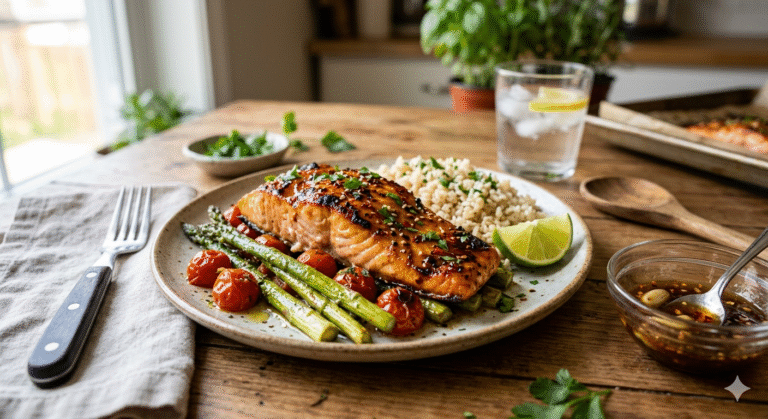
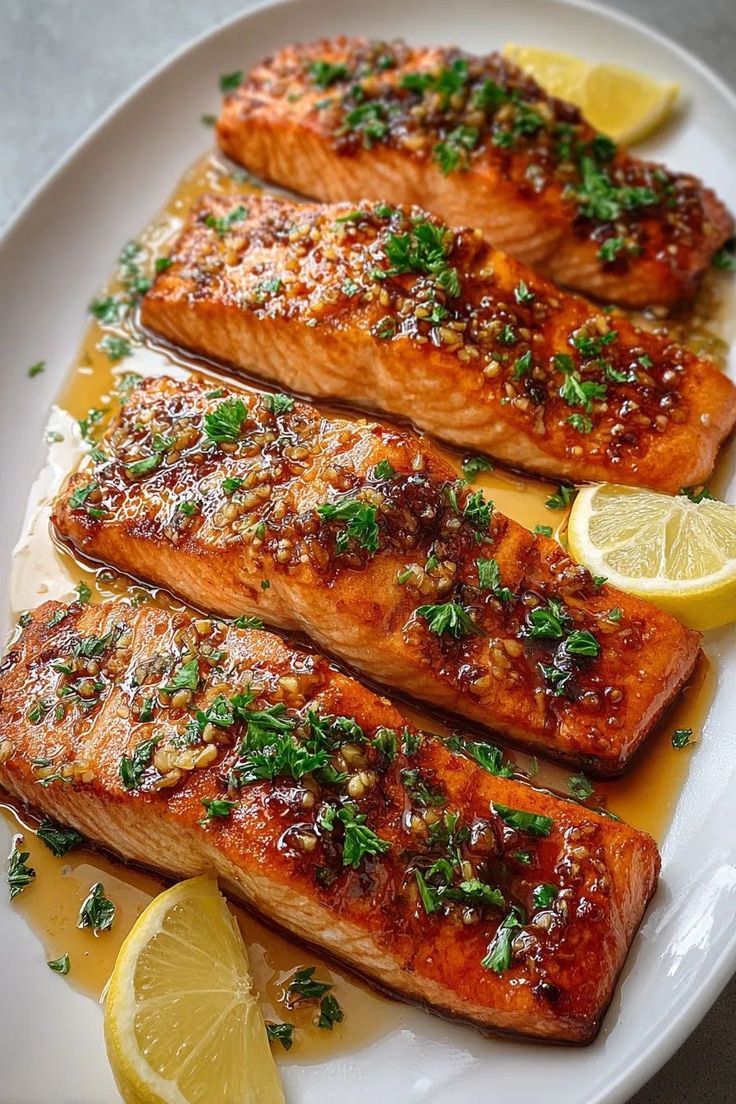
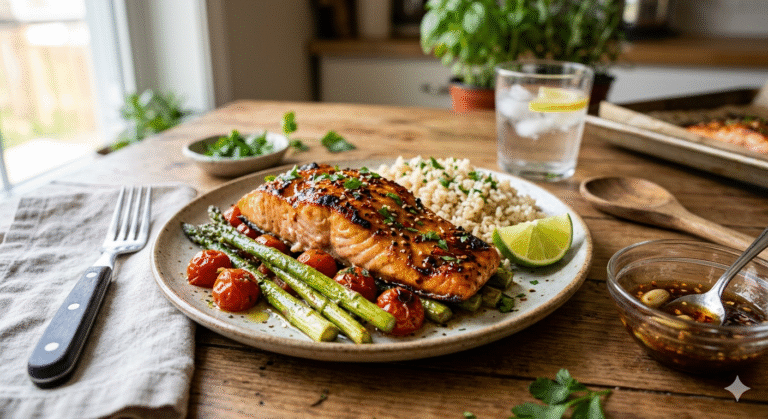
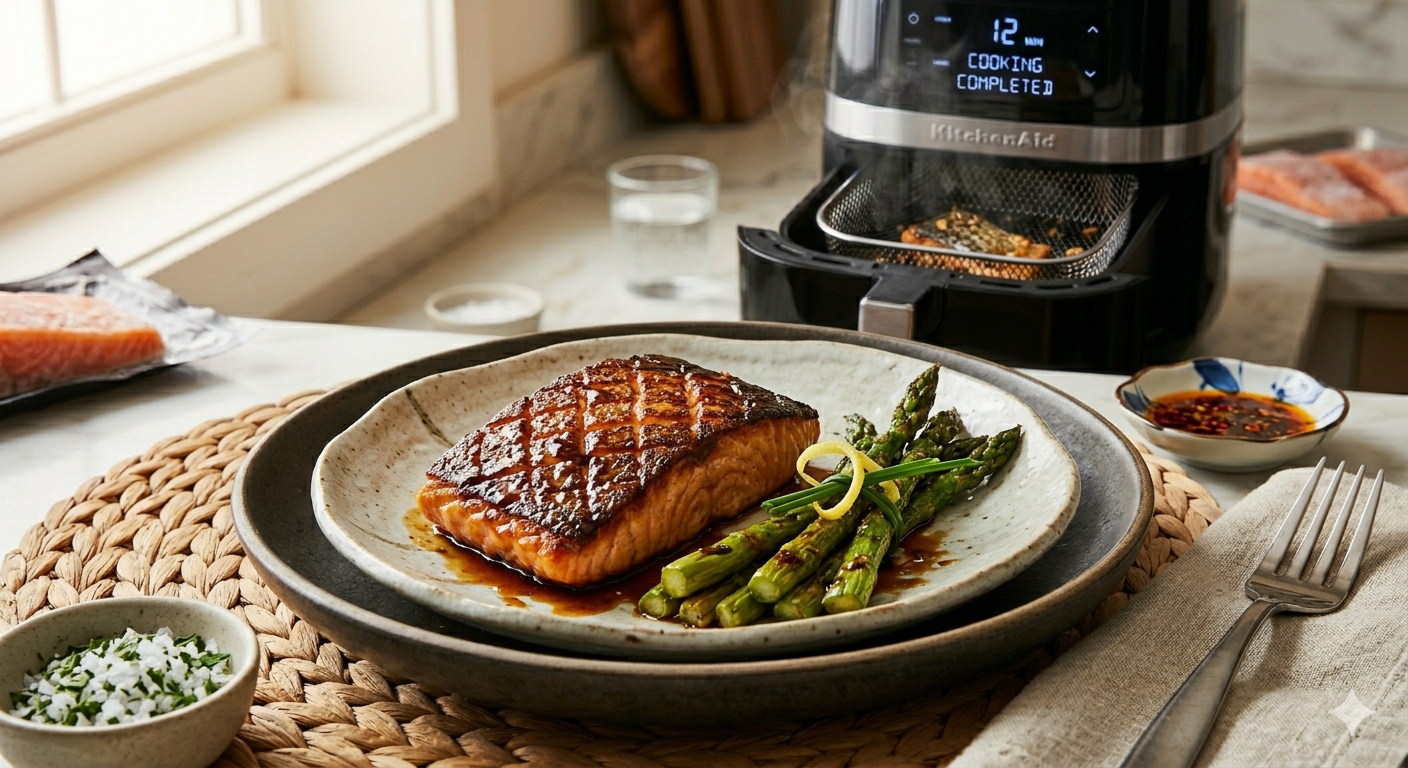
To achieve the deep, caramelized finish and vibrant presentation seen in professional culinary photography, the right balance of fats, sugars, and acids is required.
1. The Main Components
- Salmon: 2 frozen salmon fillets (ideally 6 oz each, center-cut for uniform thickness).
- Vegetables: 1 bunch of fresh asparagus, trimmed.
2. The Honey-Soy Glaze
- Base: 2 tbsp low-sodium soy sauce and 1 tbsp honey (or maple syrup).
- Aromatics: 1 tsp grated fresh ginger and 1 clove of minced garlic.
- Acid: 1 tsp rice vinegar or fresh lemon juice.
- Heat: ½ tsp chili flakes or sriracha (optional).
3. Garnishes and Finishing
- Texture: 1 tsp sesame seeds or finely chopped chives.
- Citrus: Fresh lemon zest curls and wedges.
- Seasoning: Flaky sea salt and cracked black pepper.
Step-by-Step Execution: The 12-Minute Method
Precision is key when working with high-heat convection. Follow these steps to ensure the salmon moves from ice-cold to perfectly glazed in the allotted time.
Step 1: The Initial Thaw-Cycle (Minutes 0–4)
Preheat your air fryer to 390°F. Place the frozen salmon fillets directly into the air fryer basket, skin-side down. Do not add seasonings yet; seasonings and oils do not adhere well to ice crystals. Run the air fryer for 4 minutes. This initial burst of heat evaporates the surface frost and softens the exterior just enough to allow spices and glazes to stick.
Step 2: Seasoning and Glazing (Minute 5)
Slide the basket out. The surface of the salmon should now be moist but no longer frozen. Brush the top of the salmon generously with half of the honey-soy glaze. This is also the time to add the asparagus to the basket, lightly drizzled with oil and salt. The asparagus will roast alongside the fish for the remainder of the time.
Step 3: The Caramelization Phase (Minutes 6–12)
Return the basket to the air fryer. The sugars in the honey and soy sauce will begin the Maillard reaction, creating a beautiful, lacquered crust. At the 9-minute mark, brush the remaining glaze over the salmon for a double-coated finish. Continue cooking until the timer hits 12 minutes.
Technical Indicators of Perfection
While the 12-minute timer is a reliable standard for average 6 oz fillets, variables like the starting temperature of the freezer or the specific model of the air fryer can affect the outcome.
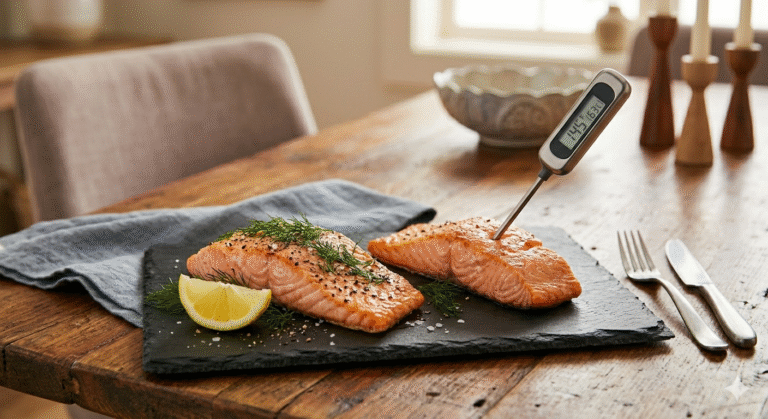
- Internal Temperature: For a “medium” finish—buttery and moist—pull the salmon when it reaches an internal temperature of 135°F to 140°F. The carryover heat will bring it to the USDA-recommended 145°F as it rests.
- The Flake Test: Gently press the top of the fillet with a fork. If the muscle fibers (flakes) separate easily along the white lines of fat, the salmon is done.
- The Asparagus: The vegetables should be tender-crisp with slightly charred tips, providing a textural contrast to the soft fish.
Avoiding Common Pitfalls
- Overcrowding: Never overlap frozen fillets. Air must circulate around all four sides of each piece to ensure it thaws and cooks at the same rate.
- Skipping the Rest: Just like a steak, salmon needs to rest for at least 2 minutes after leaving the heat. This allows the juices to redistribute so they don’t pour out when you take your first bite.
- High Sugar Content: If your glaze is exceptionally high in sugar (like a BBQ sauce), wait until the last 3 minutes of cooking to apply it. Sugar burns quickly in an air fryer; adding it too early will result in a bitter, blackened surface before the middle is cooked.
Nutritional Benefits and Sustainability
Choosing to cook from frozen is not just about convenience—it is often the most sustainable and nutritious choice. Most salmon is “flash-frozen” at sea within hours of being caught, which preserves the peak levels of Omega-3 fatty acids and Vitamin D. Furthermore, using an air fryer requires significantly less oil than pan-searing, making this 12-minute meal one of the most heart-healthy options in the modern culinary repertoire.
By mastering this technique, you transform a frozen staple into a gourmet centerpiece, proving that a sophisticated, balanced meal is achievable regardless of how much time you have to spend in the kitchen.