How to Tell if Salmon is Cooked 4 Foolproof Ways + Safety Guide
Mastering salmon is a rite of passage for any home cook. While it is celebrated for its rich omega-3 fatty acids and buttery texture, it is a notoriously sensitive protein. Because salmon is lean and contains delicate connective tissues, the transition from “perfectly translucent” to “dry and chalky” happens in a matter of seconds. Understanding the physiological changes that occur during the cooking process is essential for ensuring a gourmet result every time.
4 Foolproof Ways to Tell if Salmon is Done
To avoid the disappointment of overcooked fish, you should employ a combination of sensory checks and technical measurements.
1. The Internal Temperature Test (The Gold Standard)
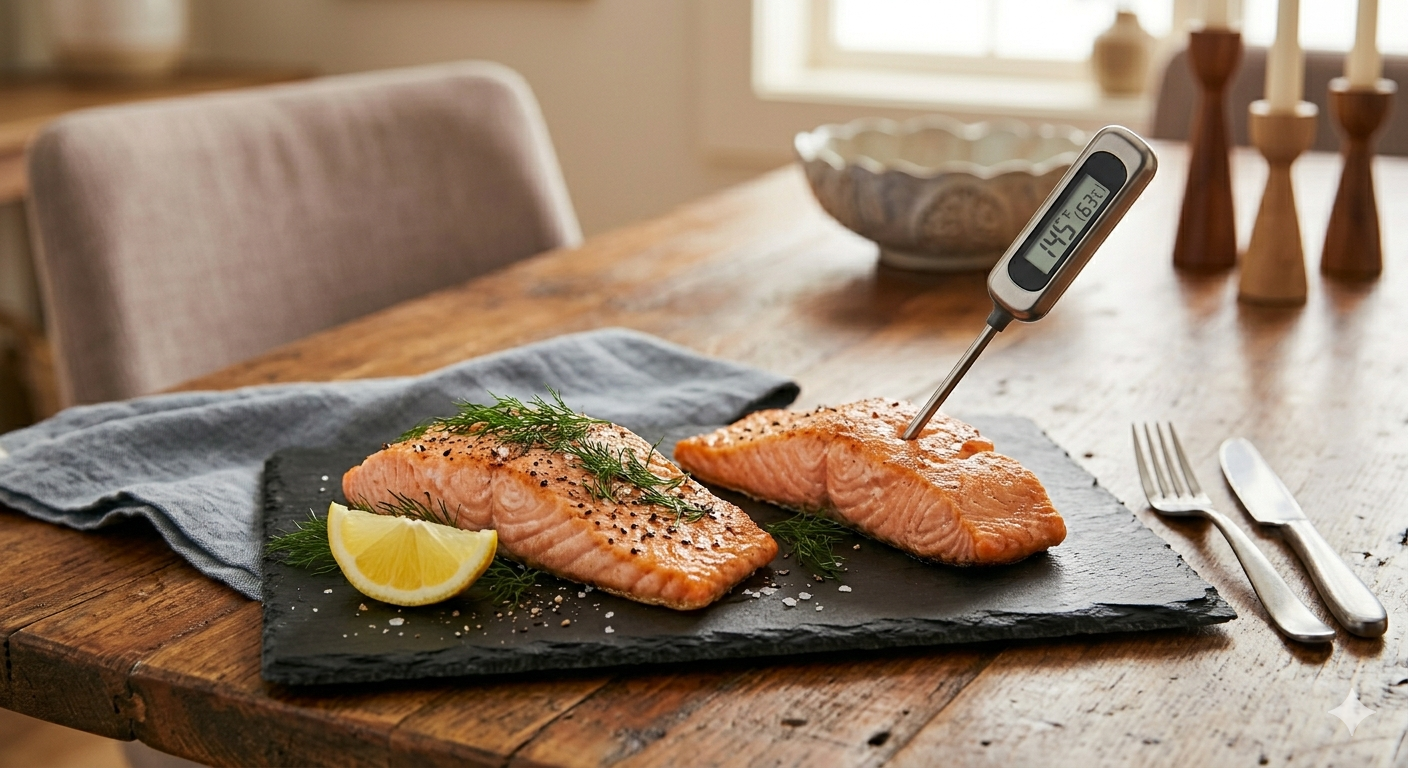
The most accurate way to determine doneness is by using a high-quality instant-read digital thermometer. Because carryover cooking is significant in dense fish, you must pull the salmon off the heat before it reaches the final target temperature.
- Medium-Rare: Pull at 120°F (49°C) for a final temperature of 125°F. The center will be quite pink and silky.
- Medium (Chef’s Recommendation): Pull at 130°F (54°C) for a final temperature of 135°F. This results in a buttery, flakey texture that remains moist.
- Well-Done: Pull at 140°F (60°C) for a final temperature of 145°F. This is the USDA-recommended safety limit, though the fish will be significantly firmer.
2. The Flake Test (Visual and Textural)
If you do not have a thermometer, you can check the muscle fibers. Take a fork or a paring knife and gently press down on the thickest part of the fillet.
- Done: The layers of the fish (the “flakes”) should easily separate along the white lines of fat.
- Underdone: The meat will resist separation and feel “rubbery” or bouncy.
- Overdone: The flakes will break apart into dry, small shards rather than large, moist segments.
3. The Butter Knife Test (The Professional Hack)
Insert a metal butter knife or a metal skewer into the thickest part of the salmon for five seconds. Remove it and immediately touch the tip of the metal to your lower lip or the back of your hand.
- Cold: The center is still raw.
- Warm/Room Temp: The salmon is medium-rare.
- Hot: The salmon is medium to well-done.
4. The Color and Opacity Check
Observe the side of the fillet as it cooks. Raw salmon is deep red or bright orange and translucent (light passes through it).
- In Progress: As it cooks, the protein denatures and turns an opaque, pale pink.
- The Goal: The salmon is ready when the exterior is completely opaque, but the very center of the thickest part still retains a tiny hint of translucency.
The Safety Guide: Albumin and Sourcing
One common concern for home cooks is the appearance of white, goopy spots on the surface of the salmon. This is albumin.
- What is it? Albumin is a liquid protein that exists inside the raw fish.
- Why does it appear? When the muscle fibers contract too quickly—usually due to high heat—they squeeze the liquid albumin to the surface, where it coagulates and turns white.
- Is it safe? Absolutely. It is perfectly edible, though it usually indicates the fish is being cooked slightly too fast or is nearing over-doneness.
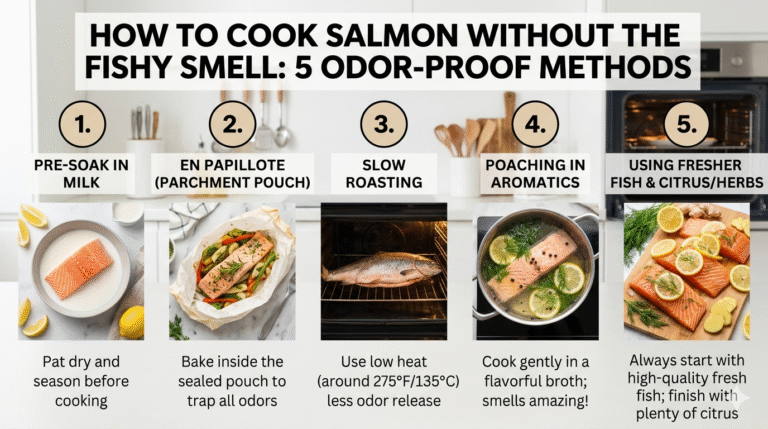
How to Cook Salmon Without the Fishy Smell: 5 Odor-Proof Methods
Many people avoid cooking salmon because of the lingering aroma. However, “fishy” smells are usually the result of oxidized fats or improper technique. By following the methods in How to Cook Salmon Without the Fishy Smell: 5 Odor-Proof Methods, you can enjoy salmon in a pristine kitchen environment.
1. Pre-Soak in Milk
This is a classic culinary technique used to neutralize odors.
- The Process: Submerge the raw salmon fillet in a bowl of milk for 20 minutes before cooking.
- Why it works: The proteins in the milk (specifically casein) bind to trimethylamine, the compound responsible for the “fishy” smell, and wash it away.
- Prep: Always pat the fish dry and season it properly after the soak but before it hits the heat.
2. En Papillote (Parchment Pouch)
This method involves sealing the fish and aromatics inside a folded piece of parchment paper.
- The Process: Place the salmon on a bed of vegetables (like peppers and onions) inside the paper and fold the edges tightly to create a seal.
- The Result: The pouch traps all steam and odors inside while the fish bakes. This gently steams the salmon in its own juices, ensuring it never dries out.
3. Slow Roasting
High heat causes fats to splatter and smoke, which carries odors through the air.
- The Process: Cook the salmon at a low temperature, around 275°F (135°C).
- The Benefit: Low heat results in less odor release and a much more even cook from edge to center. It is the most forgiving method for beginners.
4. Poaching in Aromatics
Poaching is a wet-heat cooking method that keeps the salmon submerged, preventing odor molecules from becoming airborne.
- The Process: Gently simmer the salmon in a flavorful broth containing lemon slices, peppercorns, and fresh dill.
- The Result: The kitchen will smell like the aromatics (herbs and citrus) rather than the fish.
5. Using Fresher Fish & Finishing with Citrus
The best defense against odor is high-quality sourcing.
- Selection: Always start with high-quality, fresh fish. Fresh salmon should smell like the ocean, not like “fish.”
- The Finish: Finish the dish with plenty of fresh citrus, such as lemon or lime. The citric acid neutralizes any remaining amines on the surface of the meat.
Summary Table: Doneness and Safety
| Method | Visual Cue | Internal Temp | Texture |
| Rare | Translucent, dark center | <120°F | Soft, jelly-like |
| Medium-Rare | Semi-translucent center | 125°F | Silky, buttery |
| Medium | Opaque exterior, moist center | 135°F | Flaky, firm but juicy |
| Well-Done | Fully opaque throughout | 145°F | Very firm, can be dry |
By combining these indicators of doneness with the odor-proof techniques like En Papillote or Slow Roasting, you can consistently produce world-class salmon without the stress of overcooking or a lingering scent in your home.