Blackstone Griddle Steak Recipe
The execution of a professional-grade steak on a Blackstone griddle represents a high-efficiency culinary protocol that utilizes a massive, flat conductive surface to achieve a uniform Maillard reaction and superior lipid rendering. This systematic approach leverages the griddle’s expansive thermal mass to manage multiple protein units simultaneously, providing a consistent, savory crust and a succulent internal crumb.
Structural Composition and Griddle Dynamics
The success of a griddle-based steak relies on the strategic interaction between a high-mass steel plate and the intramuscular lipid distribution of the beef.
- Expansive Conductive Interface: The flat steel surface allows for 100% contact between the protein and the heat source, facilitating a more rapid and uniform crust development compared to traditional ridged grill grates.
- Intramuscular Lipid Rendering: The constant conductive heat facilitates the phase transition of solid intramuscular fat into a liquid state, which then fries the exterior of the steak in its own rendered lipids.
- Thermal Zone Management: The modular burner configuration allows for the creation of distinct thermal zones, enabling high-velocity searing in one area while utilizing a lower-intensity zone for internal temperature stabilization.
- Vaporized Aromatic Integration: As lipids and botanical juices contact the hot steel, they undergo rapid evaporation, creating a localized aromatic environment that seasons the protein surface during the thermal cycle.
Technical Fulfillment and Equipment Infrastructure
To achieve professional-grade results, specific equipment and modular tools must be integrated into the preparation workflow.
- High-Mass Carbon Steel Griddle: The foundational component is the seasoned steel plate, which must be maintained at a specific thermal threshold to ensure non-stick performance and optimal searing.
- Precision Metal Spatulas: Long-handled, high-surface-area spatulas are required for the systematic rotation and mechanical manipulation of the steak units.
- Digital Thermal Probe: A high-velocity thermometer is a mechanical necessity to monitor internal protein coagulation and ensure the desired doneness threshold is reached without desiccation.
- Modular Infrared Thermometer: This tool is utilized to verify the surface temperature of the steel plate before the protein is introduced, ensuring a consistent starting baseline.
Step-by-Step Systematic Protocol
Achieving a professional result requires a multi-phase workflow that manages the protein from initial tempering to post-thermal stabilization.
Phase 1: Protein Tempering and Surface Preparation
The goal of this phase is to minimize the thermal shock upon contact with the griddle and ensure the surface is ready for optimal searing.
- Systematic Tempering: Remove the steak from refrigerated storage and allow it to sit at ambient room temperature for approximately 45 to 60 minutes to facilitate even heat penetration.
- Surface Desiccation: Use a high-absorbency substrate to remove all aqueous moisture from the exterior of the steak, as surface water will impede the Maillard reaction.
- Modular Seasoning Application: Apply a coarse mineral salt and cracked pepper matrix to both lateral surfaces, creating a savory foundation that will adhere to the rendered lipids.
- Vessel Thermal Activation: Ignite the burners and bring the steel plate to a target surface temperature of 230°C to 260°C.
Phase 2: High-Velocity Conductive Searing
This phase utilizes high-intensity heat to establish the primary textural and flavor thresholds of the steak.
- Lipid Application: Apply a high-smoke-point oil or a modular butter unit to the steel plate, ensuring a shimmering, high-lubricity surface.
- Initial Contact: Place the steak onto the high-intensity zone. Use the metal spatula to apply light pressure, ensuring 100% mechanical contact with the steel.
- Bilateral Thermal Cycle: Sear the first side for approximately 3 to 4 minutes until a robust, golden-brown crust is achieved. Flip the unit once using the precision spatula.
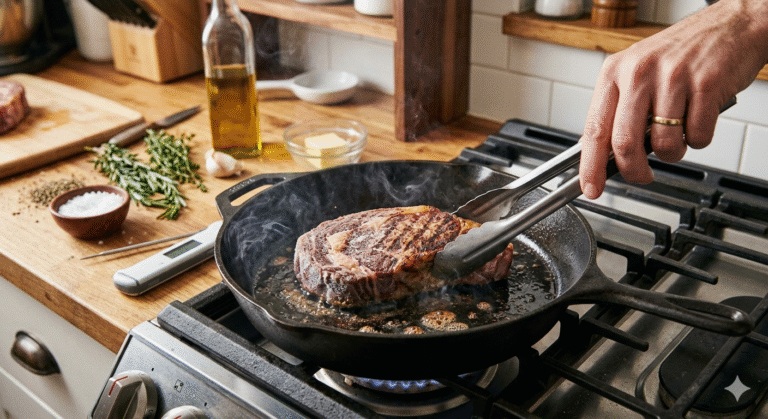
- Edge and Fat Rendering: Use tongs to hold the steak vertically, pressing the fat cap against the hot steel to facilitate lipid rendering and browning of the lateral surfaces.
Phase 3: Aromatic Basting and Thermal Stabilization
Once the exterior is established, modular flavor units are introduced to enhance the aromatic profile.
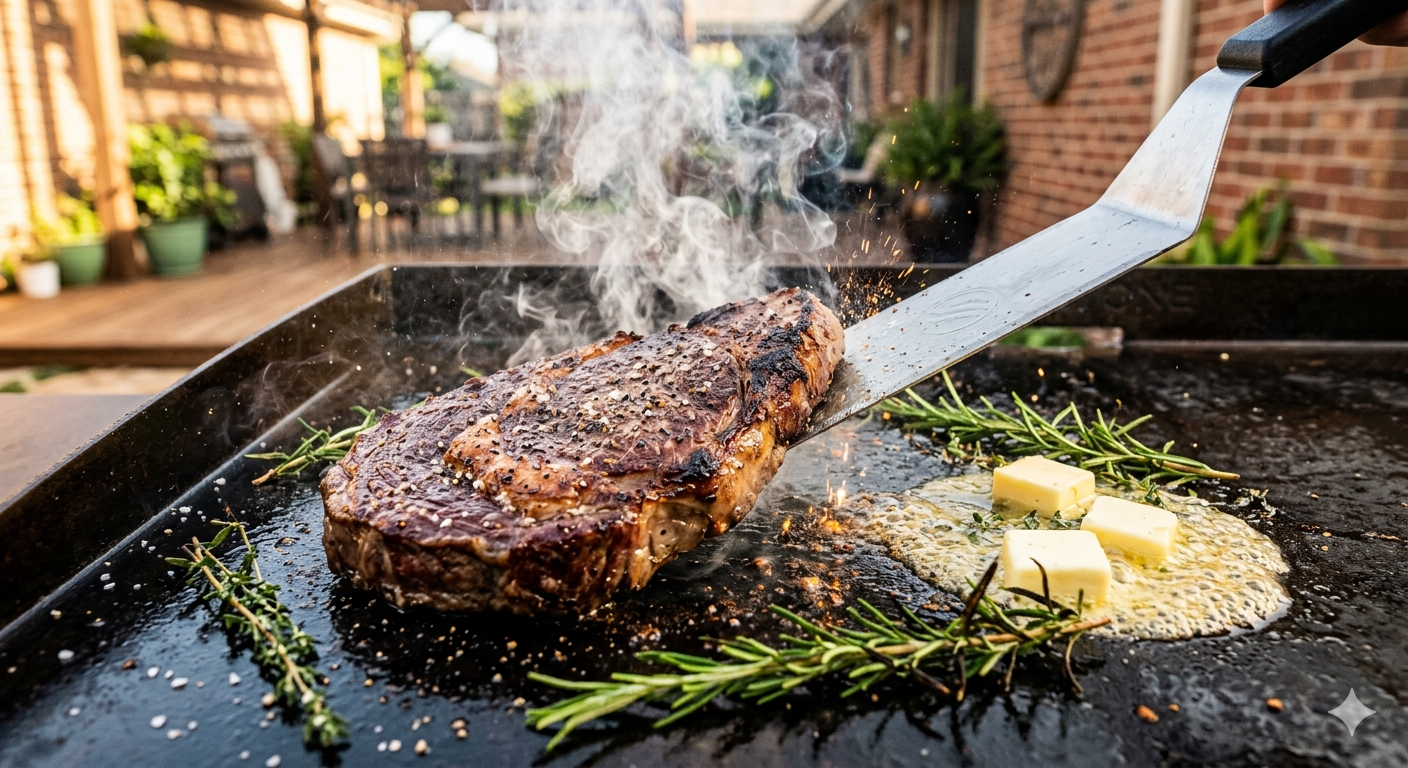
- Botanical Integration: Place fresh rosemary, thyme, and garlic units onto the griddle surface adjacent to the steak.
- Butter Emulsion Basting: Add modular butter units to the botanical units. Once melted and bubbling, use the spatula or a large spoon to baste the steak with the hot, aromatic lipids.
- Zone Transition: If the exterior is seared but the internal core is under-coagulated, move the steak to a lower-intensity thermal zone and cover with a modular basting dome to facilitate even convective heating.
- Final Probe Monitoring: Monitor the internal temperature until it reaches a point 3°C below the final target doneness.
Phase 4: Post-Thermal Stabilization (The Rest)
A critical mechanical stage that allows for internal moisture redistribution and pressure equalization.
- Conductive Transfer: Move the steak from the griddle to a neutral resting board or a conductive wire rack.
- Internal Moisture Equalization: During a 5 to 10-minute rest, the internal fluids that were driven to the center by the heat redistribute back into the muscle fibers.
- Carryover Thermal Rise: The residual energy continues to raise the internal temperature to the final desired state, ensuring a tender and succulent internal crumb.
Comparative Thermal Management Table
| Doneness Level | Internal Pull Temp | Final Rested Temp | Internal Appearance |
| Rare | 49°C | 52°C | Cool, red center |
| Medium-Rare | 53°C | 57°C | Warm, red center |
| Medium | 57°C | 63°C | Warm, pink center |
| Medium-Well | 63°C | 68°C | Slightly pink center |
Systematic Utility and Professional Appeal
This culinary configuration is highly optimized for systematic kitchen management and professional results.
- Production Efficiency: The expansive surface area makes it an ideal candidate for high-volume, professional-grade meal preparation for large groups.
- Versatile Culinary Application: The griddle can simultaneously process accompaniments such as onions, mushrooms, or potatoes, creating a complete culinary presentation.
- Nutritional Infrastructure: The combination of high-density animal protein and essential lipids provides a comprehensive satiation threshold for diverse audiences.
- Visual Presentation: The vibrant contrast between the deeply seared amber crust, the melting butter, and the verdant botanical highlights provided by the rosemary, as depicted in the reference image, provides a high-quality standard for the final dish.
Professional Finishing and Narrative Depth
To further enhance the final results, focus on the specific mechanical sound of the sear and the visual transition of the butter as it emulsifies with the botanical oils. This physics-based approach to cooking provides a sophisticated and reliable guide that ensures high-quality outcomes, regardless of the specific beef cut selected. By following this systematic protocol, the resulting steak will possess the exact textural contrast and savory depth required for a professional-grade meal.