Masterclass: The Science and Art of Perfect Air Fryer Chicken Thighs
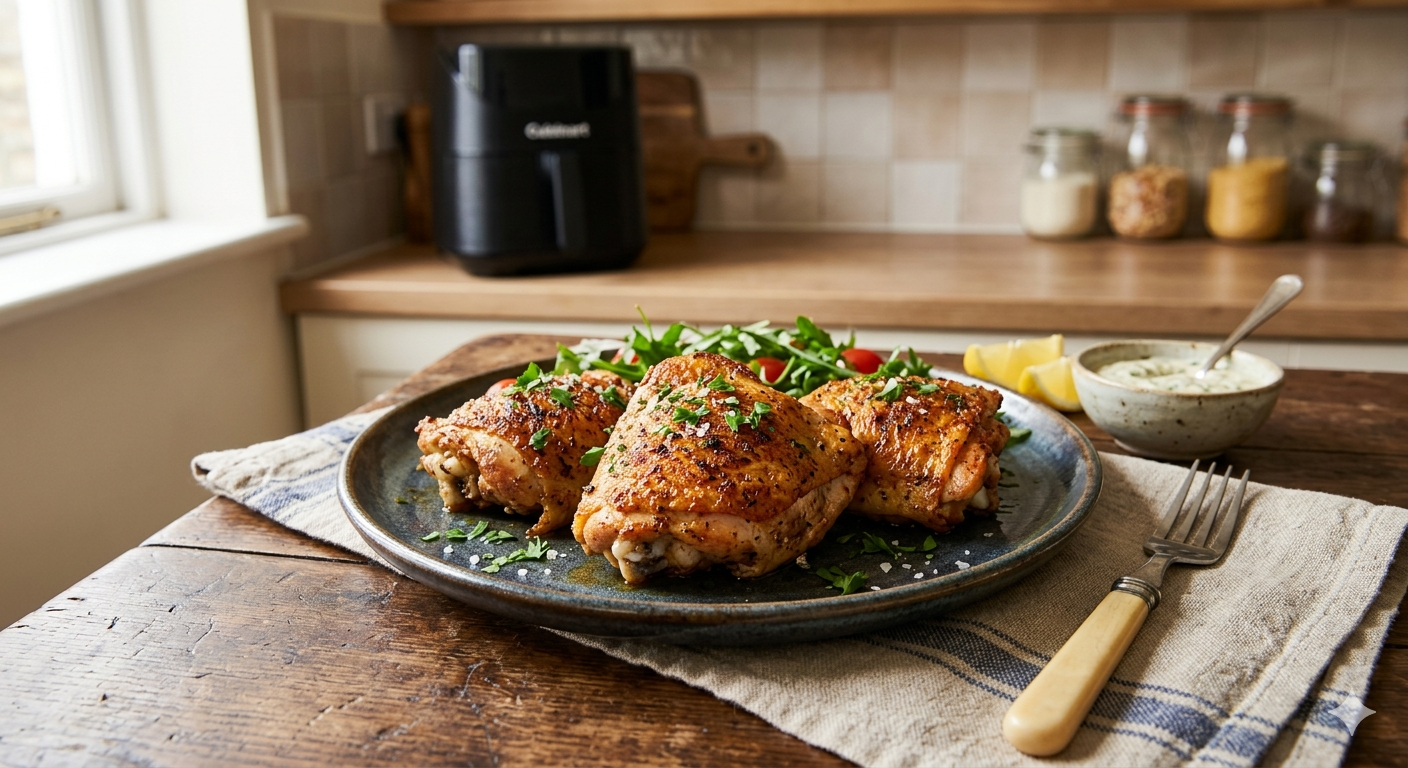
The culinary world has undergone a quiet revolution in recent years, spearheaded by a compact countertop appliance that has redefined our approach to home cooking. While the air fryer initially gained fame for its ability to mimic deep-fried textures with a fraction of the oil, it has proven to be far more than a one-trick pony. Among the various proteins that can be prepared in this high-powered convection machine, none find a more perfect home than the chicken thigh. If the chicken breast is the lean, predictable workhorse of the kitchen, the chicken thigh is its flavorful, forgiving, and succulent counterpart. When subjected to the rapid-fire air circulation of a modern air fryer, the result is a culinary triumph: skin that shatters like glass and meat that remains impossibly tender.
Why the Air Fryer is the Ultimate Tool for Dark Meat
To appreciate why air fryer chicken thighs have become a staple for professional content creators and home cooks alike, one must understand the mechanical advantages of the appliance. An air fryer is essentially a high-intensity convection oven that uses a concentrated heating element and a powerful fan to circulate air at high speeds around the food.
360-Degree Airflow and the Maillard Reaction
In a traditional oven, chicken thighs often sit in their own rendered fat on a baking sheet, which can lead to soggy undersides. The air fryer solves this through its perforated basket design. As the chicken cooks, hot air hits it from every possible angle simultaneously. This environment accelerates the Maillard reaction—the chemical process between amino acids and reducing sugars that creates the complex, savory flavors and deep brown color we associate with perfectly roasted meat. Because the fat drips away into the outer drawer rather than pooling around the meat, the skin is allowed to dehydrate and crisp with unprecedented efficiency.
The Forgiveness of the Thigh
Chicken thighs are naturally high in fat and connective tissue, specifically collagen. Unlike chicken breasts, which have a very narrow window of perfection before becoming dry, thighs actually become more tender as they cook beyond the standard safety threshold. While $165^\circ\text{F}$ is the safe minimum, chicken thighs truly shine when they reach an internal temperature of $175^\circ\text{F}$ to $185^\circ\text{F}$. At these temperatures, the collagen melts into gelatin, creating a “melt-in-your-mouth” texture that is nearly impossible to achieve with leaner cuts.
Bone-In vs. Boneless: Selecting Your Cut
Depending on your schedule and desired texture, there are two primary paths to take when preparing this dish.
Bone-In, Skin-On Chicken Thighs
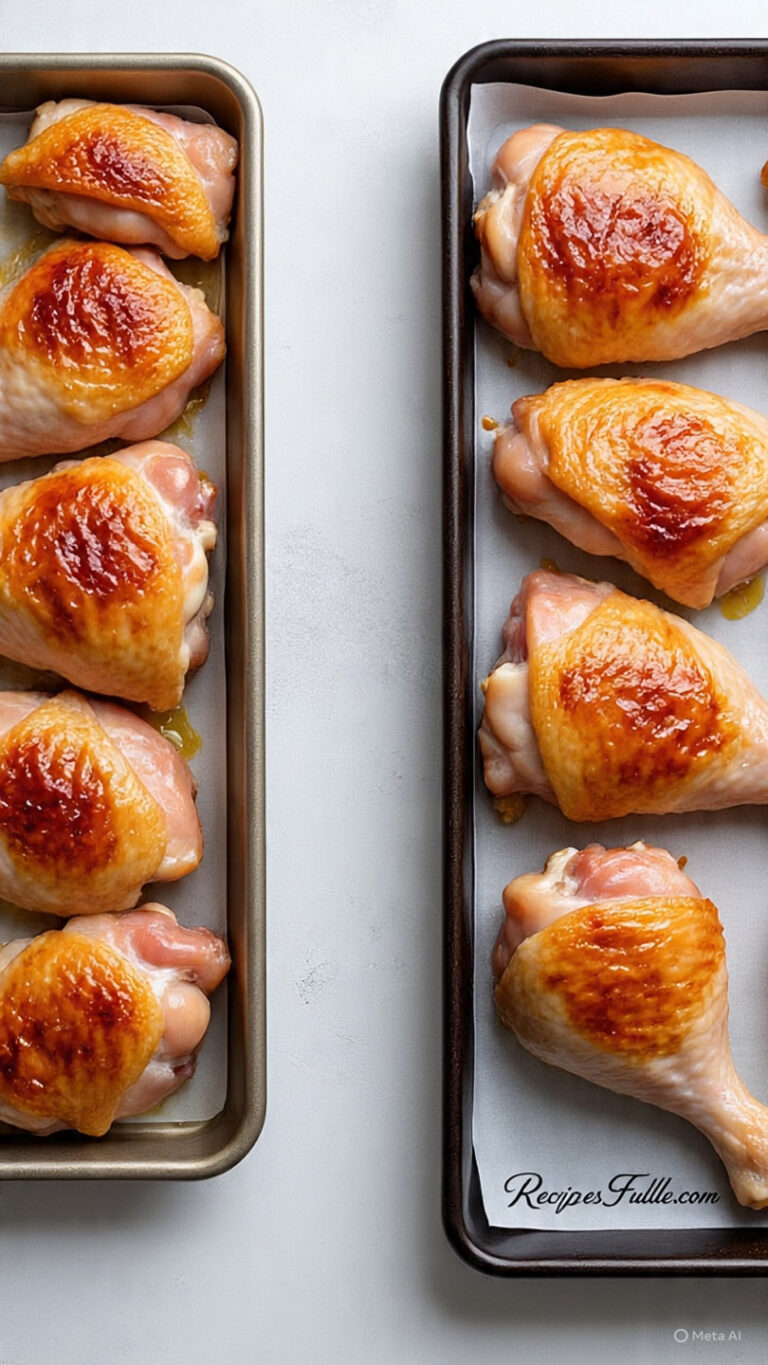
This is the gold standard for air frying. The bone acts as a thermal conductor, helping to cook the meat from the inside out while retaining moisture. The skin provides a natural protective barrier that renders into a salty, crispy delight.
- Average Cook Time: $22-28$ minutes at $380^\circ\text{F}$.
- Best For: Dinner parties, weekend comfort meals, and those who prioritize maximum crunch.
Boneless, Skinless Chicken Thighs
These are the kings of weeknight efficiency. Without the bone and skin, they cook in roughly half the time. While they lack the shatter-crisp exterior of their bone-in relatives, they are perfect for absorbing rubs and marinades.
- Average Cook Time: $12-15$ minutes at $380^\circ\text{F}$.
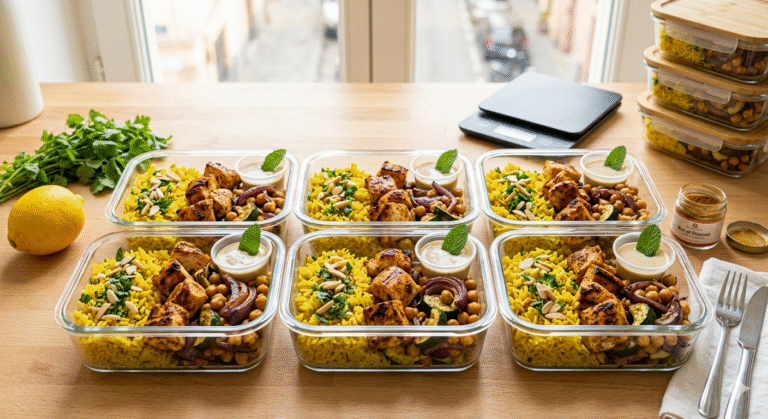
- Best For: Meal prep, tacos, salads, and quick high-protein lunches.
The Anatomy of a Perfect Dry Rub
Because the air fryer moves air so quickly, wet marinades can sometimes blow off or cause excess smoking if they contain high sugar content. A dry rub is generally the most effective way to season chicken in this environment.
The Flavor Foundation
- Kosher Salt: Essential for drawing moisture out of the skin to ensure it crisps.
- Smoked Paprika: Provides a deep, mahogany color and a hint of wood-fired flavor.
- Garlic and Onion Powder: These aromatics brown beautifully without the risk of burning that fresh garlic faces in high-heat convection.
- Dried Oregano or Thyme: Adds an earthy, herbal lift that cuts through the richness of the dark meat.
The Secret Ingredient: Baking Powder
For an extra-shattered crunch that rivals deep-fried chicken, many creators recommend adding a half-teaspoon of baking powder (not baking soda) to the rub. The baking powder increases the pH of the skin, allowing the proteins to break down more effectively and creating micro-bubbles on the surface that increase the total “crunch” area.
Mastering the Technique: Step-by-Step
1. The Prep
The single most important step for crispy skin is starting with dry meat. Use paper towels to pat the thighs bone-dry on all sides. Any residual moisture will create steam, which is the enemy of a crisp exterior.
2. The Binding Agent
Lightly coat the thighs in a high-smoke-point oil, such as avocado or grapeseed oil. Avoid extra virgin olive oil for this specific task, as its lower smoke point can lead to acrid flavors and a smoky kitchen at $400^\circ\text{F}$. The oil helps the spices stick and acts as a heat conductor.
3. The Arrangement
Place the chicken in the air fryer basket in a single layer. It is vital not to overcrowd the basket. If the thighs are touching or overlapping, the air cannot circulate around the sides, resulting in “pale,” soft spots.
4. The Cooking Cycle
For bone-in thighs, start with the skin-side down. Cook at $380^\circ\text{F}$ for $12$ minutes. This allows the fat on the underside to begin rendering and the meat to cook through. Then, flip the thighs so they are skin-side up for the final $10-12$ minutes. This ensures the skin is the last thing to be hit by the direct heat, leaving it at its peak crispness when you serve.
Advanced Variations and Glazes
The “Sticky” Finish
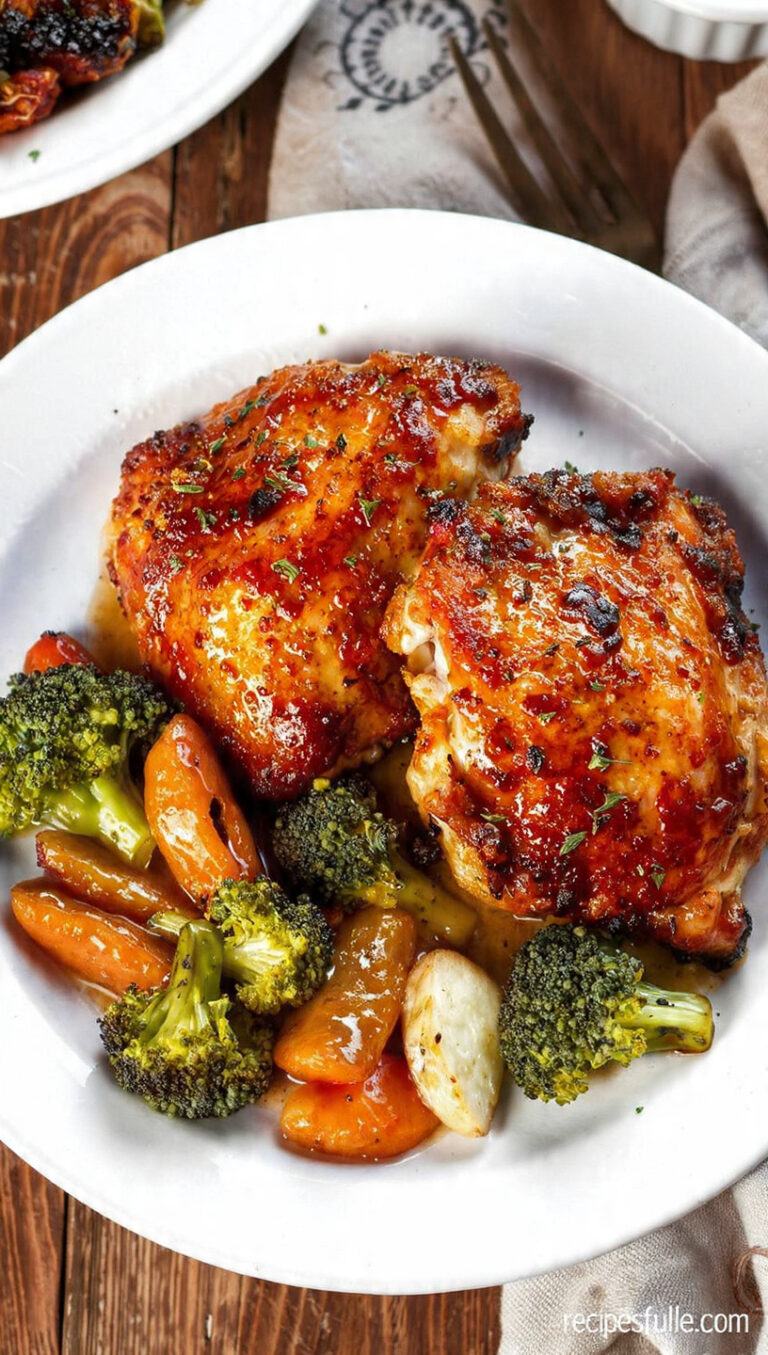
If you prefer a glazed finish (such as BBQ, Hot Honey, or Teriyaki), do not apply the sauce at the beginning. The sugars in these sauces will burn long before the chicken is cooked. Instead, brush the glaze on during the last $2-3$ minutes of cooking. This allows the heat to “set” the glaze into a sticky, lacquered coating without carbonizing it.
Air Fryer “Fried” Chicken
You can achieve a traditional breaded texture by dredging the thighs in flour, then an egg wash, and finally seasoned panko breadcrumbs. The key to success here is to spray the breaded thighs generously with an oil spray once they are in the basket. Any “white” floury spots that aren’t moistened by oil will remain dry and chalky after cooking.
Infused Aromatics
For a gourmet touch, place fresh rosemary sprigs or halved lemons in the bottom of the air fryer drawer (underneath the basket). As the chicken fat renders and drips onto these aromatics, the fan will circulate the infused scent back up and through the meat, adding a subtle layer of complexity to the final dish.
Maintenance and Safety
Managing Smoke
If your air fryer begins to smoke, it is likely due to grease from the chicken thighs hitting the bottom of the hot drawer and burning. To prevent this, some cooks place a slice of bread in the bottom of the drawer to absorb the drippings, or add a tablespoon of water to keep the drippings from reaching their smoke point.
The “C” Rule for Accuracy
When checking for doneness, look at the shape of the thigh. A perfectly cooked thigh will pull back slightly from the bone, and the meat will feel firm to the touch. Using an instant-read thermometer is the only way to be $100\%$ certain; aim for that sweet spot of $175^\circ\text{F}$ to $185^\circ\text{F}$ for the best eating experience.
Conclusion
The air fryer has transformed the chicken thigh from a simple cut of meat into a versatile, gourmet canvas. By understanding the principles of airflow, temperature management, and proper preparation, anyone can produce results that rival professional kitchens. Whether you are meal prepping for the week or hosting a family gathering, these techniques ensure that your chicken is always the star of the plate—crispy, juicy, and utterly satisfying.